

ELEMENTS
FOR THE SAKE OF CREATION
Our formation focus for summer 2024 is to reflect on our our identity and hope as a people who practice the way of love through the art of living alongside for the sake of creation. Below are are reflections given at our Sunday Gatherings and other resources to aid your journey.
Engagement Questions:
• In considering the flow and harmony of the Genesis creation story, where in your life do you welcome God to create space, and where do you welcome God to fill space?
• God works with the chaos not against it, when you read this in light of the creation narrative, your own life, and our world, how does it speak of hope?
• What part of today’s reflection was new to your ears?
Questions for Engagement:
When you hear that you bear the image of God, what do you think that means for your life?
We read that when God saw all that he had made he found it "very good". Do you contemplate the "good" God has made as much as for equal to the fall and sin of humankind? Why or why not?
When you consider the difference between dominion/ruling and domination/exploitation, which do you think we as Christians have led with and why?
Listen to the conversation about this reflection on The Afterglow
Questions for Engagement:
• What does "serving and preserving" mean to you?
• How would you describe the relationship between humans and animals? Between people and plants?
• How can you fill the vocation to till (serve) and tend (preserve) the earth, relationship, faith and life.
Questions for Engagement:
• How do trees contribute to the overall well-being and health of humans?
• How can the imagery of trees in the Bible inspire us to cultivate spiritual growth and bear good fruit in our lives?
• In what ways can the examples of trees in the Bible, such as the Tree of Life and the Tree of Knowledge of Good and Evil, provide guidance and wisdom for navigating our modern challenges and dilemmas?
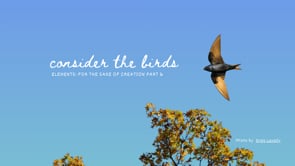
Questions for Engagement:
• What did you respond to in the video of Troy Clark?
• What have you noticed about God when considering the birds?
• Think about your view of technology and your view of nature. how have you over-prioritized either. Why?
• Let's talk about worry and anxiety! Does Jesus's observation about the birds seem simplistic? What keeps you from trusting in God's superabundance?
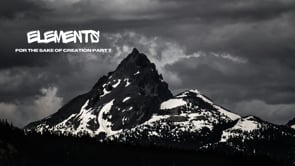
Questions for Engagement:
• Have you ever had a "mountain top" experience? If so, what do you remember about it? Looking back on it now how has your understanding of God changed or evolved?
• In what ways can the awe-inspiring majesty of mountains deepen one's connection with God?
• What spiritual lessons can be learned from the transfiguration of Christ?
Engagement Questions:
• The "cloud of witnesses" refers to the faithful individuals from the previous chapters of Hebrews (especially Hebrews 11), who exemplified faith and perseverance. Who in your life (past or present) serves as an inspiration to remain steadfast in your faith journey?
• The cloud offers us the idea that we are not alone in our struggles, that there's a presence and people who are supportive. Write the names of those who support you, list at least one way their support has helped you.
• The cloud of witnesses imagery encourages us to actively engage in faith, shedding distractions, throwing off what is "easily" entangling us. Who in your life has set examples of doing this very thing? What have you or can you learn from them?
Engagement Questions:
• Name a storm you’ve encountered?
• Have you ever let a storm get inside of you?
• When facing storms, what characteristics of God do you most often forget or ignore?
• Nature’s power can be a source of fear. How can you see it as a source of faith?

Engagement Questions:
When you have a day off and no expectations from any one else, what do you like to do?
What is a place in God’s creation where you feel “rested” in body, soul, and spirit?
What does it feel like to be rested? What keeps us so driven that we feel guilty when we rest?
What bush, what people, what ecosystem, what place might be on fire that you have encountered in your everyday life? What would it mean for you to see the misery, hear the crying out and be concerned with the suffering?
Do you most imagine yourself saying, "Here I am" or "Who am I?" to this injustice? Why?
Where are fires of love or anger quick to burn for you right now? Where are these fires slow to burn?
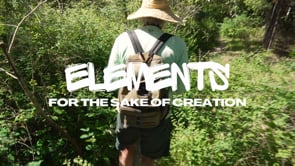
This short documentary is about Portland naturalist and Alongsiders community member Troy Clark. Troy sits on the board of the Columbia Slough Watershed Council and is an avid birder.
Produced by Jon Betz and the Alongsiders Team.
READINGS

PODCASTS

Engagement Questions:
• Was this the first time you heard of the theory of God’s two books: scripture and nature? If so, if not, do you think these two books are both celebrated within the church today? Why or why not?
• Do you implement the “two books” into your life and faith? If so, what does that look like? If not, would you want to?
• Paul writes that God’s divine nature is known through what is made/created. How have you seen God, or been encountered by God through what has been made? What do you think Paul means people are without excuse?